The congress incorporates green decorations throughout the venue, creating a natural and soothing environment that promotes the well-being of all participants. This initiative contributes to SDG Goal 3, "Good Health and Well-Being," by supporting the physical and mental comfort of attendees, while providing a sustainable and enjoyable congress experience.
Greeting
The World Veterinary Association Congress - #WVAC2026 - will be held in Tokyo, Japan, in April 2026, 31 years after an earlier WVAC took place in Yokohama in 1995.
WVA and JVMA are happy to announce that the theme of the congress will be "One Health for a Better Tomorrow: Veterinary Medicine Holds the Key". Veterinarians are at the frontline in understanding how the health of humans, animals, and the environment are interconnected.
Through this approach, WVA and JVMA aim to tackle challenging global issues, such as infectious diseases and antimicrobial resistance more effectively and efficiently.
Veterinarians collaborate closely with physicians, environmental specialists, and other professionals to create a better future. At the global level, the WVA and the World Medical Association (WMA) have renewed their partnership under the leadership of Dr de Jong, current WVA President.
Under the leadership of Dr Kurauchi, similar agreements have been established in Asia between the Federation of Asian Veterinary Associations (FAVA) and the Confederation of Medical Associations in Asia and Oceania (CMAAO). In Japan, the Japan Veterinary Medical Association has partnered with the Japan Medical Association, as well as with local veterinary and medical associations at the prefectural and city levels.
Both WVA and JVMA are proud to have WVAC2026 in a country that has built such a strong network of collaborations.
Moving forward, we aim to expand these partnerships further. However, for this to succeed, it’s important for The 2026 World Veterinary Association Congress to provide the opportunity for the general public, and not just the professional, to understand the concept of One Health. We are planning content that will provide this and be open to the public, as well as providing programs for veterinary nurses, other veterinary professionals, and students.

Join us in Tokyo for WVAC2026 and be part of the driving changes that are being led by veterinarians globally through learning opportunities working collaboratively with professional colleagues in the incredible capital of Japan.
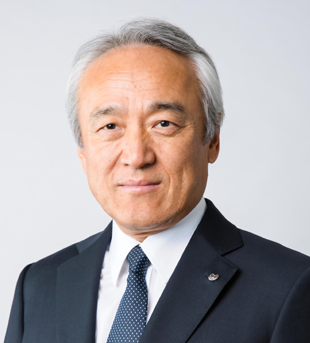
I assume presidency of the WVA 2026-2027 and I’m ready to build upon what we have already done, improve the social standing of veterinarians, and to address the challenges faced by the veterinary industry.
Organizing committee
World Veterinary Association Congress 2026 in Tokyo Organizational Structure
Congress Chair
- Local host Committee
- Comprehensive management of event operations
- Planning Committee
- Planning of event operations and related matters
- Finance Committee
- Management of income and expenses, sponsorships, advertisements and donations
- Program Committee
- Planning of academic programs, selection and coordination of chairs and speakers, and management of program operations
About Japan Veterinary Medical Association
Please follow the link below for further information.
About the World Veterinary Association
What is the World Veterinary Association Congress?
- The first congress was held in 1863 in Hamburg, Germany.
- It shares the latest knowledge, research, and technology related to veterinary medicine.
- It builds international networks and contributes to the advancement of global veterinary medicine and One Health worldwide.
- In Japan, it was last held in Yokohama in 1995, marking a return after 31 years.
World Veterinary Association (WVA)
- Membership: 101 organizations worldwide (including observers)
- Composed of more than 900,000 veterinarians
- The Japan Veterinary Medical Association joined in 1954
- Objectives: To improve animal health and public health through advocacy, education, and partnerships.
Dr. Kurauchi, President of the Japan Veterinary Medical Association, has been serving as the WVA’s President-Elect since April 2024 and will assume the role of WVA President in April 2026.
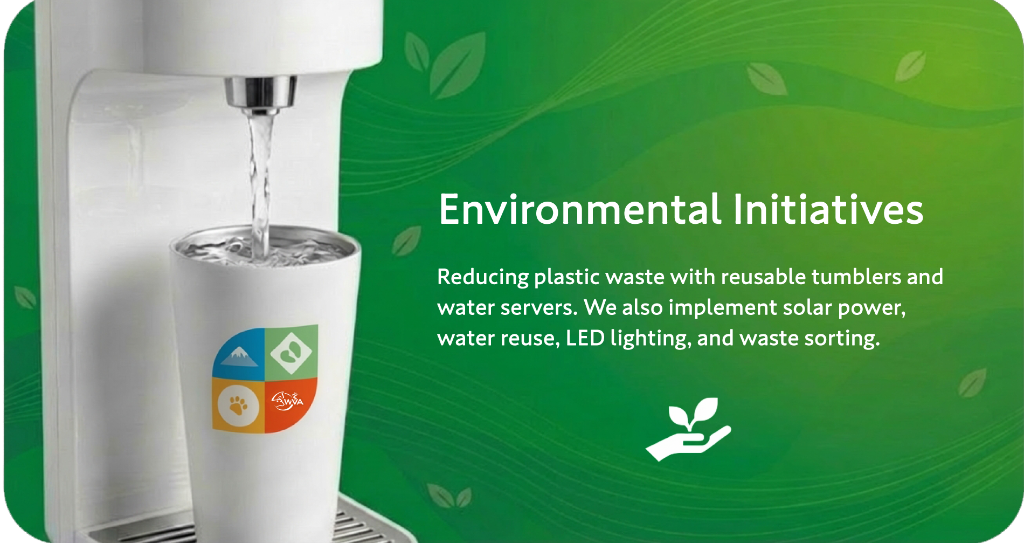
Environmental Initiatives
Green Space Design
Food and Beverage Services
Installation of Water Stations
As part of our efforts to reduce environmental impact, plastic bottled beverages will not be provided at the venue. We kindly ask all participants to bring their own bottles and use the water stations available on-site.
* Reusable bottles will be distributed to a limited number of participants.
Food Waste Recycling
Food waste generated by the restaurants and catering in the facilities is recycled and transformed into electrical energy, etc. Collected food waste is transported to a recycling plant in Ota City where it is transformed into biogas via methane fermentation technology. Biogas is then used in the factory's cogeneration system to produce energy in the form of electricity.
Most of this electricity is then sold to the community surrounding the recycling plant.
We also strive to thoroughly separate and reduce other garbage produced in the facilities.
Installation of Separated Waste Bins
Waste bins for recyclable and combustible materials will be installed throughout the venue. We kindly ask participants to properly separate their waste, which helps promote recycling and reduce overall waste. This initiative contributes to lowering environmental impact and supporting sustainable conference operations. Your cooperation plays an important role in protecting the global environment.
Venue
Solar Power Generation System
Solar panels are installed on the roofs of the Hall Buildings. The power they generate is converted to AC power and used in the buildings.
Solar Heat Collecting System
Apart from the solar power generation system, the hall roofs are also equipped with evacuated glass tube solar thermal collectors. Water that has been heated using solar heat is supplied to restrooms and showers in the buildings, as well as to restaurant kitchens.
Waste Water Recycling System
Wastewater generated in the buildings (water from washbasins or restaurant kitchens) and rainwater collected on the premises are processed (biotreatment and membrane separation) in a wastewater recycling system and used to flush toilets, water plants, and melt snow that has accumulated on the roof of the Glass Building.
Energy-Saving in Lighting and Air Conditioning
Lighting equipment in seating areas, lobbies, corridors, and other spaces are being changed to LED lights, which consume less power and last longer. We strive to save more energy by using highly energy-efficient permanent magnet motors for air blowers and introducing a system that optimizes the intake of outdoor air for air conditioning.
Energy Management System (EMS)
To achieve energy-efficient operations while maintaining a comfortable, convenient environment for visitors, an energy management system (EMS) is used to optimize operation of all equipment in the building including air conditioning.
Tokyo International Forum tracks its usage of renewable energy on a real-time basis and displays it with digital signage devices onsite to clearly disseminate information about its environmental activities.
Direct Station Access and Environmentally Friendly Transport
The venue is directly connected via underground passageways to multiple JR and Tokyo Metro stations, allowing for comfortable access even on rainy days. We kindly ask all visitors to use public transportation when coming to the venue. Your cooperation helps reduce CO₂ emissions and contributes to efforts against global warming.
* For detailed access information, please visit the following website. https://www.t-i-forum.co.jp/en/access/
ABOUT JAPAN & TOKYO
INFO ABOUT JAPAN
Japan National Tourism Organization (JNTO)
This is the official tourism website for Japan, offering detailed travel information, tips on destinations, events, and itineraries.
Japan Guide
A comprehensive and user-friendly travel guide to Japan, including detailed information on cities, landmarks, transportation, and cultural tips.
Time Out Tokyo
The website is perfect for finding things to do in Tokyo, with event listings, restaurant recommendations, and neighborhood guides.
HyperDia
A train route search engine for Japan. It helps travelers plan train journeys, with information on routes, schedules, and fares.
INFO ABOUT TOKYO
Go Tokyo
Official Tokyo tourism website featuring tourist attractions, events, and area information.
About Tokyo
Introduction to Tokyo's history, culture, and urban attractions.
Shops & Restaurants around venue
Information about shops and restaurants around the venue area.
About "Marunouchi"
Introduction to the Marunouchi area.
Time Out TOKYO, Marunouchi
Dining, sightseeing, and event information around the Marunouchi area.
A tourist information booth by TCVB (Tokyo Convention & Visitors Bureau) will be available from 21 to 24 April.
CLIMATE & TIME ZONE
Japan has a diverse climate due to its geographical length from north to south.
The time zone is UTC/GMT+9.
The weather in Tokyo at the end of April is typically pleasant, mild, and warm, with average daytime highs around 18-22°C (64-71°F) and cooler nights around 11-13°C (52-56°F), though you'll need a light jacket for evenings as temperatures drop, and expect some occasional light rain and breezy days.
CURRENCY EXCHANGE
Major international airports, like Narita (NRT) and Haneda(HND), have currency exchange counters offering both cash and traveler's check exchange services.
US dollars, euros, and some other major currencies can also be exchanged at city banks and large post offices in Tokyo. Bank exchange services are typically available from 9:00 AM to 3:00 PM on weekdays. Post offices offer foreign exchange services from 9:00 AM to 4:00 PM. Additionally, currency exchange machines are available in various locations, including major train stations and some hotels, providing extended operating hours.
You can also withdraw cash in Japanese yen from your bank account using debit or credit cards issued in your home country. The ATMs at convenience stores (displaying the International ATM Service sign and logos of usable credit cards) allow you to withdraw cash 24 hours a day, making them extremely convenient.
While cash is still widely used in Japan, credit and debit cards (especially Visa, MasterCard, and JCB) are accepted in most hotels, large stores, and restaurants.
CONSUMPTION TAX
Consumption tax (VAT) in Japan is 10%, and it is usually added at the cash register.
Major department stores and electronics shops often offer their products duty-free to overseas travelers if they show their passports (copies are not accepted). To qualify for duty-free shopping, the total purchase amount must meet a minimum threshold, and the items must be taken out of the country within a specific period.
ELECTRICITY
The voltage used throughout Japan is uniformly 100 volts, AC.
A convertible type of electrical appliance, such as a hair dryer, travel iron, or shaver, will therefore be handy; otherwise, a transformer is required to convert the voltage.
There are no columnar-shaped plugs or 3-pin plugs used in Japan, but 2-flat-pin plugs are used instead. It is therefore advised to purchase a plug adapter beforehand if your devices use a different plug type.
HEALTHCARE & SAFETY
Drinking Water
Tap water is safe to drink anywhere in Japan. Mineral water, including major imported brands, can be easily obtained from supermarkets, convenience stores, vending machines, and other similar places.
Hospitals and Medical Services
Medical systems and facilities in Japan are well established, so you can expect to receive high-standard medical treatment should you have any problem with your health during your stay. Japan has a well-developed healthcare system with both public and private hospitals, and many medical professionals are fluent in English, particularly in major cities. Emergency medical services are also readily available, and pharmacies are well-stocked with over-the-counter medications.
INTERNET ACCESS & SIM
Though Japan is ranked at the top of many general safety rankings in the world, travelers still need to be aware of potential dangers and situations that could lead to accidents or injury. The organizers do not assume any liability for such incidents. It is strongly advised that you purchase your own travel insurance to cover any unforeseen circumstances, including medical emergencies, trip cancellations, or lost luggage.
Japan has a well-developed and fast internet infrastructure, with wide availability of Wi-Fi and mobile data coverage across the country. However, there are a few things to keep in mind when using the internet in Japan, especially for travelers.
Public Wi-Fi
Many public places, such as cafes, restaurants, airports, and shopping malls, offer free Wi-Fi. However, access is often password-protected for security reasons, and you may need to provide identification when registering for the Wi-Fi service. Some providers require long-term contracts, which typically limit the service to residents of Japan.
Accommodations
Most hotels and accommodations in Japan are equipped with internet access. While some places offer Wi-Fi, others may have a wired (LAN) internet connection in the room. If you're staying in a place with only a wired connection, you can bring your own wireless travel router to connect multiple devices.
Prepaid SIM Cards / Mobile Hotspot Devices
You can purchase a prepaid SIM card from major carriers or at kiosks in airports. These SIM cards are often available in various packages, including options for data-only or both calls and data. They are typically valid for a set period, such as 7, 14, or 30 days, making them ideal for tourists.
Renting a mobile hotspot device is another popular option for travelers. These portable Wi-Fi routers allow you to stay connected wherever you go within the coverage area. You can rent these devices at airports, and they can typically support multiple devices simultaneously, making them convenient for groups or families.
Coverage
Japan has excellent 4G and 5G coverage in urban areas, but in rural or mountainous regions, coverage may be more limited. It's a good idea to check the service area of any SIM card or mobile hotspot device you plan to use, especially if you are traveling outside major cities.
USEFUL TELEPHONE NUMBERS
Emergency Services
- Police: For emergencies requiring police intervention, dial 110
- Fire and Ambulance: For fire or medical emergencies, dial 119.
Airport Flight Information
- Narita Airport (NRT): For flight information, call +81-476-34-8000.
- Haneda Airport (HND): For flight information, call +81-3-5757-8111.